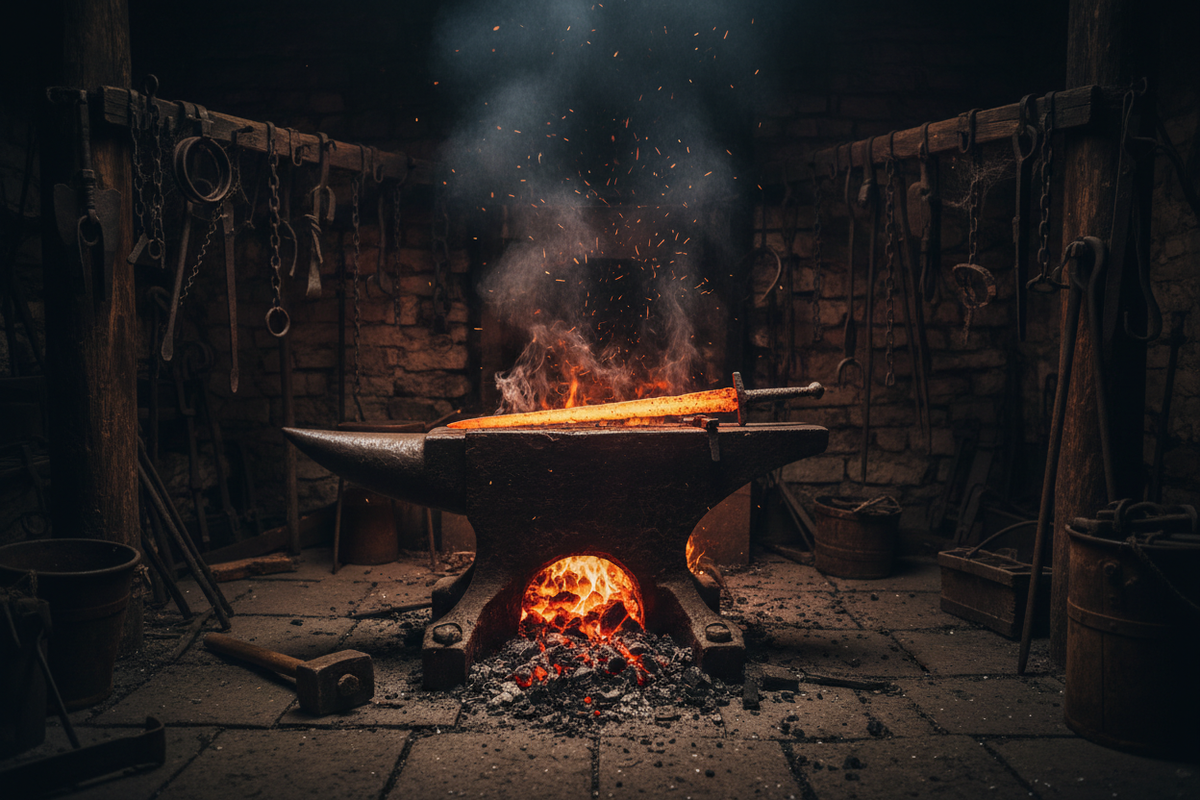
The Birth of the Forge
Long before factories and assembly lines, there was fire, iron, and the steady rhythm of a hammer on an anvil. Blacksmithing is one of humanity's oldest crafts — dating back over 3,000 years to the early Iron Age, when civilizations across the Middle East, Asia, and Europe first discovered that iron ore, when heated and worked, could be shaped into tools, weapons, and armor far superior to anything bronze could offer.
The blacksmith was not merely a craftsman. He was the backbone of civilization — forging the plows that fed nations, the swords that defended kingdoms, and the horseshoes that kept commerce moving. In many ancient cultures, the smith was regarded with near-mythical reverence. The Greeks had Hephaestus, god of the forge. The Norse had Völundr, the master smith of legend. Even in West African traditions, the blacksmith held a sacred, dual role as both creator and spiritual intermediary.
The Medieval Golden Age of the Forge
The medieval period (roughly 500–1500 AD) is perhaps the era most synonymous with blacksmithing in the popular imagination — and for good reason. The demand for weapons and armor during this time drove the craft to extraordinary heights of sophistication.
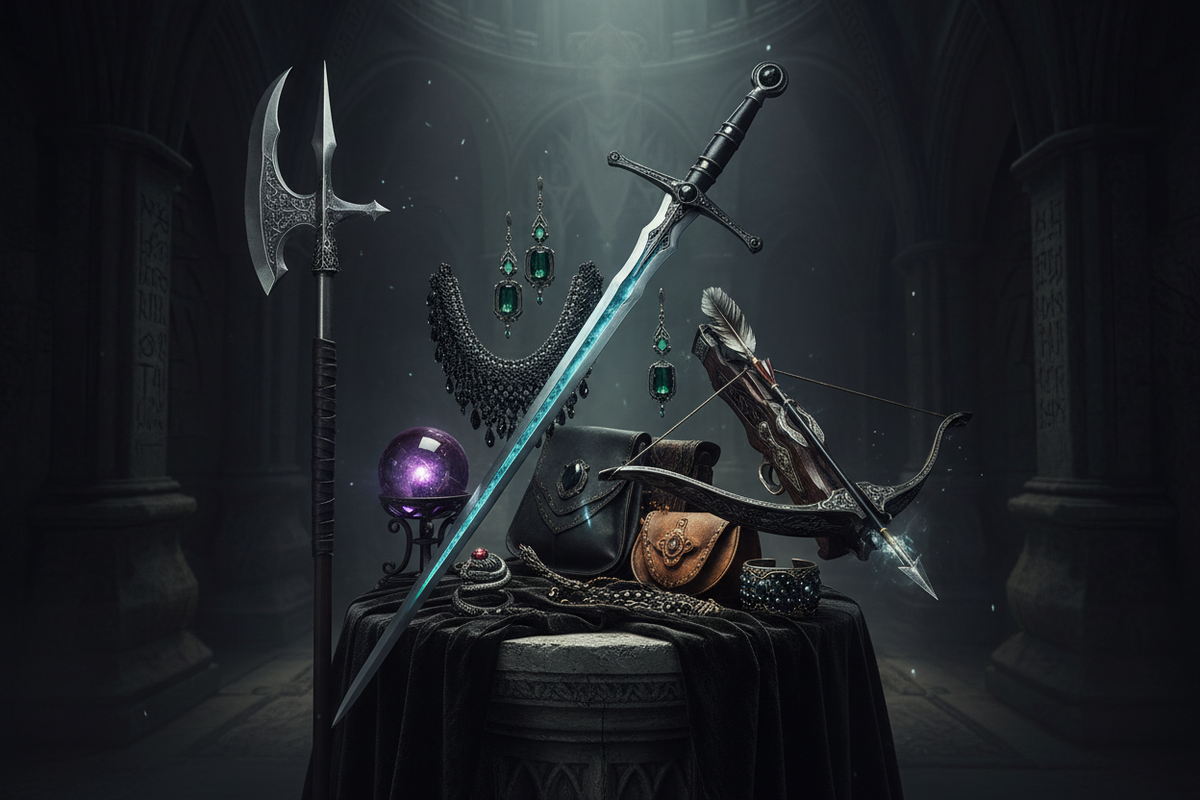
Skilled armorers and weaponsmiths developed techniques for folding and tempering steel to achieve blades of remarkable strength and flexibility. The longsword, the halberd, the crossbow — each required not just raw strength at the anvil, but deep metallurgical knowledge passed down through generations of guild apprenticeships.
Medieval blacksmiths were also the engineers of their day. They crafted the hinges, locks, nails, and ironwork that held castles together. A single fortified manor might contain thousands of individually hand-forged iron components — every one of them shaped by a smith's hands.
The Industrial Revolution: The Forge Meets the Machine
The 18th and 19th centuries brought seismic change. The Industrial Revolution introduced steam-powered hammers, rolling mills, and mass production — and for a time, it seemed as though the individual blacksmith might be rendered obsolete.
In many ways, the trade did transform dramatically. Large-scale ironworks replaced village forges for the production of structural components, rails, and machinery. The romantic image of the lone smith at his anvil gave way to the roar of industrial foundries.
Yet the craft never died. Instead, it bifurcated: industrial metalworking scaled up into engineering and manufacturing, while traditional blacksmithing retreated into specialization — fine ironwork, custom toolmaking, farriery, and artistic metalwork that machines simply could not replicate.
The 20th Century: Near Extinction and Renaissance
By the mid-20th century, traditional blacksmithing had reached a low point. The rise of the automobile eliminated the need for farriers in most urban areas. Cheap mass-produced goods undercut handmade ironwork. Many ancient techniques were at risk of being lost entirely.
But a renaissance was quietly taking shape. In the 1970s and 1980s, a global revival of interest in traditional crafts — driven in part by the counterculture movement and a growing appreciation for handmade goods — brought blacksmithing back into the spotlight. Organizations like the Artist Blacksmith's Association of North America (ABANA), founded in 1973, helped preserve and transmit centuries of accumulated knowledge to a new generation of smiths.
Blacksmithing in the Modern Age
Today, blacksmithing occupies a fascinating dual existence. On one hand, modern metallurgy and CNC machining have made it possible to produce metal components with a precision and speed no human hand could match. On the other hand, there is a surging global demand for handcrafted, one-of-a-kind metalwork — from custom kitchen knives and architectural ironwork to fantasy weapon replicas and wearable art.
The modern blacksmith is as likely to have a YouTube channel as a coal forge. Digital communities have accelerated the sharing of techniques across continents. Bladesmithing competitions draw millions of viewers on television. And a new generation of makers — many of them self-taught through online resources — are pushing the boundaries of what the craft can be.
At the same time, the core of blacksmithing remains unchanged: fire, metal, and the human hand working in concert to shape something that did not exist before. That fundamental act — transforming raw material into something purposeful and beautiful — is as compelling today as it was three millennia ago.
The Legacy Lives On
At Tohsaka's Lounge, we carry that legacy forward. Every medieval replica in our collection is a tribute to the smiths who came before — the anonymous craftsmen who forged the weapons of history and the artisans who kept the flame alive through centuries of change. When you hold one of these pieces, you hold a thread that connects you to one of humanity's oldest and most enduring traditions.
The forge never truly goes cold. It simply finds new hands.

Leave a comment
This site is protected by hCaptcha and the hCaptcha Privacy Policy and Terms of Service apply.